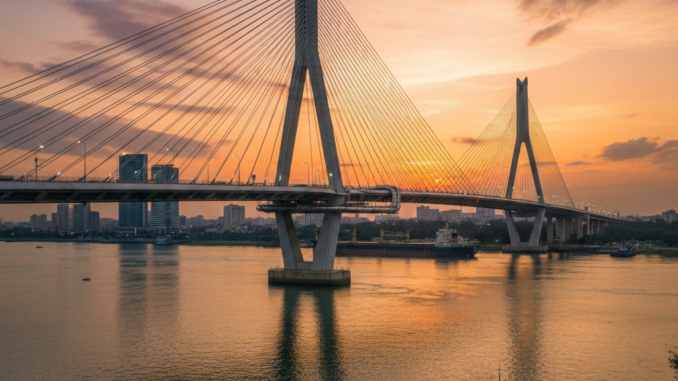
YANGON, February 22, 2026 – After years of anticipation and overcoming significant construction hurdles, the Myanmar-Korea Friendship (Dala) Bridge has officially transformed from a long-held dream into a bustling reality. The bridge, which held its grand opening on February 6, now serves as a high-tech gateway connecting the dense commercial hub of downtown Yangon with the burgeoning potential of Dala Township.
Spanning the Yangon River, this 1.9-kilometer cable-stayed masterpiece—the highest and longest of its kind in the country—marks a turning point for the city’s urban landscape.
Economic Dimension: Unlocking the South
For decades, the Yangon River acted as a financial barrier. Dala remained largely rural and underdeveloped while the north side of the river boomed with foreign investment. The new bridge effectively dissolves this boundary:
- Reduced Logistics Costs: Goods from the Ayeyawady Region can now reach Yangon’s markets in minutes rather than hours, bypassing the slow and expensive ferry systems.
- Property & Investment: Real estate interest in Dala is surging, with new industrial zones and commercial projects planned to mirror the growth seen in downtown Yangon.
- Employment: New YBS (Yangon Bus Service) routes began operating across the bridge on February 12, allowing thousands of Dala residents to access high-paying jobs in the city without the unpredictability of river travel.
Social Dimension: Enhancing Quality of Life
The most profound impact is felt at the community level. For the residents of Dala, the bridge is more than steel and concrete; it is a lifeline.
- Healthcare Access: Previously, medical emergencies often ended in tragedy due to ferry delays. Residents can now reach specialist hospitals in downtown Yangon in under 10 minutes.
- Education: Students who once faced treacherous river crossings during monsoon season now enjoy a safe, reliable commute to Yangon’s universities.
- Connectivity: The isolation of Dala, Kawhmu, and Kungyangon townships has ended, fostering greater social integration within the Yangon Region.
Environmental Dimension: A Modern Approach
Despite the massive scale of the $188 million project, sustainability and environmental resilience were core components of the design:
- Water Security: Integrated into the bridge’s structure are specialized pipelines designed to transport fresh water to Dala, a region historically plagued by water scarcity during the hot season.
- Maritime Harmony: With a 49-meter vertical clearance, the bridge allows 15,000-ton sea-going vessels to pass underneath, ensuring that Yangon’s vital maritime trade remains uninterrupted.
- High-Tech Monitoring: The structure is equipped with advanced sensors for monitoring wind speed and seismic activity, ensuring long-term structural integrity against climate-related challenges.
“The bridge is for the people. We are no longer just looking at the city from across the water; we are now a part of it.” — Local teashop owner in Dala.
As the ferry engines grow quiet and the sound of traffic takes over, the Myanmar-Korea Friendship Bridge stands as a symbol of bilateral cooperation and a bold step toward a more unified, prosperous Yangon.